Define your prediction scope
Before you configure your ai-generated prediction infrastructure, you must decide what the system is actually trying to solve. This initial decision dictates every subsequent choice, from data ingestion pipelines to model selection. Building a generic "smart" system usually results in a system that is good at nothing.
You need to categorize your goal into one of three distinct buckets: price forecasting, sentiment analysis, or macro trend identification. Each bucket requires different data structures and computational logic. Confusing these categories is the most common reason prediction systems fail in production.
Price forecasting
Price forecasting involves predicting specific numerical values for assets, such as stock prices, cryptocurrency rates, or commodity futures. This is a regression problem where the output is a continuous number. Your infrastructure must prioritize low-latency data feeds and time-series models like LSTMs or Transformers that understand temporal dependencies.
Sentiment analysis
Sentiment analysis focuses on extracting emotional tone from unstructured text, such as news articles, social media posts, or earnings call transcripts. This is a classification problem. Your infrastructure should emphasize natural language processing (NLP) pipelines and vector databases that can quickly map textual data to sentiment scores.
Macro trend identification
Macro trends look for broader structural shifts in the market, such as sector rotation or economic cycle changes. This requires synthesizing diverse data sources, including economic indicators, policy announcements, and cross-asset correlations. Your system needs to handle high-dimensional data and identify long-term patterns rather than short-term noise.
Choosing the right scope prevents resource waste. If you try to predict prices using sentiment-only data, your model will lack the necessary numerical precision. Conversely, using complex macro models for high-frequency trading will result in unacceptable latency. Be specific about your target variable.
Select data sources and feeds
Your AI-generated prediction infrastructure is only as trustworthy as the data it consumes. Garbage in, garbage out isn't just a cliché; it's the primary reason prediction models fail in production. To build reliable infrastructure, you must prioritize official, primary, and real-time data sources over noisy, aggregated, or unverified inputs.
Start by identifying the authoritative origin for your specific domain. For financial predictions, this means direct feeds from exchanges or regulatory filings rather than third-party aggregators. For infrastructure planning, historical utilization data from municipal databases or official transport authorities provides the ground truth needed to identify patterns. These primary sources eliminate the lag and distortion that often plague secondary data markets. Real-time feeds are essential for short-term accuracy, but they must be paired with robust historical datasets for training. Look for sources that offer high-frequency updates with clear audit trails. Avoid platforms that sell "cleaned" data without disclosing their normalization methods, as hidden biases in preprocessing can skew your model's predictions. The goal is transparency and immediacy, ensuring your infrastructure reacts to the market, not a delayed reflection of it.
Choose prediction tools and models
Building an ai-generated prediction infrastructure requires matching the right software stack to your specific risk tolerance and data volume. There is no single "best" model; instead, you need a combination of high-frequency inference engines for real-time decisions and batch-processing frameworks for deep historical analysis. The global AI infrastructure market is projected to reach $75.9 billion by 2026, signaling a shift toward specialized, modular tooling rather than monolithic platforms [Grand View Research].
Core Infrastructure Components
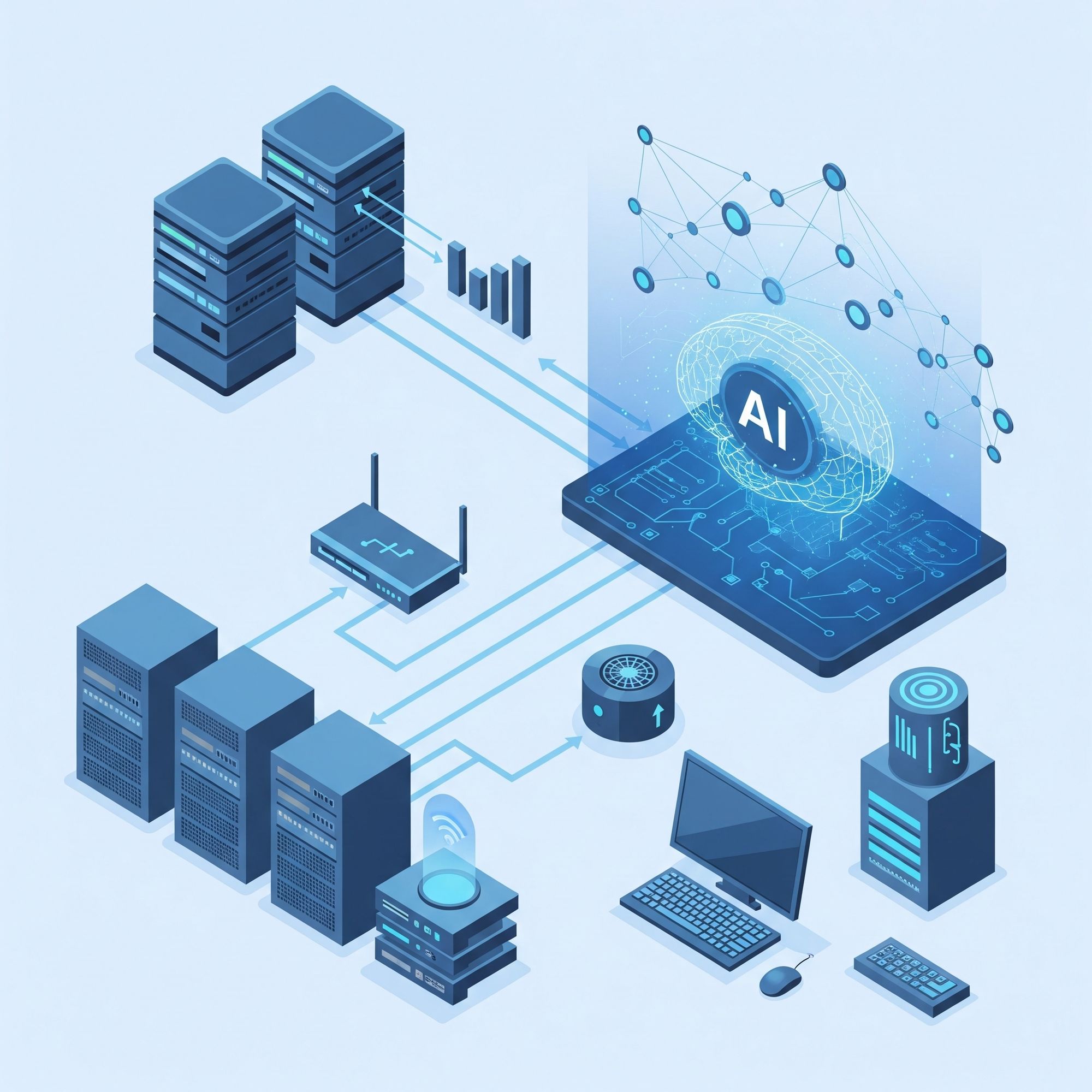
Your stack needs three distinct layers. First, a data ingestion layer (like Apache Kafka) to handle incoming market feeds. Second, a compute layer (GPU-accelerated cloud instances) to run your models. Third, a serving layer to deliver predictions with low latency. If any layer bottlenecks, your predictions become stale.
Comparing Prediction Platforms
When selecting a provider, focus on latency, data support, and accuracy metrics. The table below compares three common approaches for financial prediction infrastructure:
| Provider Type | Latency | Data Support | Accuracy Focus |
|---|---|---|---|
| Cloud ML Platforms (AWS SageMaker) | Medium (ms) | High (Structured/Unstructured) | General Forecasting |
| Specialized FinTech APIs | Low (<10ms) | High (Market Data Feeds) | Real-time Signals |
| Open Source (PyTorch/TensorFlow) | Variable | Custom/Full Control | Model-Specific Optimization |
Hardware and Tooling
For high-stakes decisions, you cannot rely on standard CPU instances alone. You need dedicated GPU resources for training complex transformer models. If you are building this infrastructure in-house, consider investing in high-bandwidth memory (HBM) servers. For smaller teams, managed cloud services reduce the operational overhead.


As an Amazon Associate, we may earn from qualifying purchases.
Verification and Next Steps
Before deploying, run backtests against historical data to verify accuracy. Ensure your infrastructure can handle sudden spikes in query volume. The next step is to integrate these tools into a cohesive workflow.
Deploy and validate the system
Building an ai-generated prediction infrastructure is only half the work. The real test happens when you push it into production. You need a deployment path that minimizes risk while maximizing data feedback. This section walks you through the exact steps to go from model training to live market validation.
1. Ingest and validate data pipelines
Before the model sees a single trade, your data infrastructure must be bulletproof. Garbage in, garbage out applies doubly to AI. Start by connecting your primary data feeds—price ticks, order book depth, and alternative data sources—to a standardized ingestion layer.
Ensure you are handling missing values and outliers explicitly. If your pipeline drops a single tick during a high-volatility event, your backtesting results will be skewed. Use a staging environment to run data quality checks before allowing new records to enter the training set. This step is critical for maintaining the integrity of your ai-generated prediction infrastructure.
2. Train and refine the model
With clean data flowing, it is time to train your prediction models. Start with a baseline model to establish a performance floor. Then, iterate on more complex architectures, such as gradient boosting or recurrent neural networks, depending on your specific market signals.
Focus on feature engineering. Raw price data rarely tells the whole story. Incorporate technical indicators, volatility metrics, and macroeconomic signals to give your AI a richer context. Regularly retrain the model to prevent drift, as market dynamics shift faster than most static algorithms can adapt.
3. Backtest against historical data
You cannot validate predictions without historical context. Run your model against at least five years of historical market data, including periods of high and low volatility. This process, known as backtesting, reveals how your infrastructure would have performed in the past.
Pay close attention to overfitting. If your model performs perfectly on historical data but fails in live trading, it has likely memorized noise rather than learning patterns. Use walk-forward validation to ensure your model generalizes well to unseen data. This rigorous testing phase separates robust systems from fragile ones.
<Steps>
  <Step title="Ingest Data" icon="clipboard-check" image="/cdn/articles/6ebb2523-310c-41dc-8213-1b74e532a333-96ab96a4.png" imageAlt="AI-Generated Prediction Infrastructure in">
    Connect feeds to a staging layer. Validate for missing values and outliers before training.
  </Step>
  <Step title="Train Model" icon="search">
    Establish a baseline, then iterate on complex architectures using rich feature engineering.
  </Step>
  <Step title="Backtest" icon="audit">
    Run against 5+ years of history. Use walk-forward validation to prevent overfitting.
  </Step>
</Steps>
4. Monitor live performance
Once you move to live trading, the stakes change. You are no longer comparing against historical data; you are competing against real-time market participants. Set up a monitoring dashboard that tracks key performance indicators (KPIs) such as prediction accuracy, latency, and P&L.
Alerts are your first line of defense. Configure them to trigger when performance deviates from expected norms by a significant margin. This allows you to intervene before small errors compound into large losses. Continuous monitoring is what keeps your ai-generated prediction infrastructure reliable in a live environment.
5. Validate against real-world outcomes
The final step is validation. Compare your AI’s predictions against actual market outcomes over a sustained period. This isn’t just about whether the model was "right" or "wrong," but whether the predictions provided a statistical edge.
Document your validation results. If the model consistently underperforms a simple benchmark, it may be time to revisit your feature set or architecture. Validation is an ongoing process, not a one-time checkbox. Regularly review these metrics to ensure your infrastructure remains competitive.
How often should I retrain my AI prediction model?
Retraining frequency depends on market volatility and model drift. In fast-moving markets, daily or weekly retraining may be necessary. In more stable environments, monthly retraining might suffice. Monitor performance metrics to determine the optimal schedule.
What is the most common mistake in AI deployment?
Overfitting is the most common mistake. Models that perform perfectly on historical data often fail in live trading because they have memorized noise. Always use walk-forward validation to test generalization.
How do I handle data gaps in my pipeline?
Never ignore missing data. Use interpolation techniques for small gaps, or flag and exclude records with significant missing values. Consistent data handling is critical for the integrity of your ai-generated prediction infrastructure.
Monitor and adjust predictions
An AI-generated prediction infrastructure is not a "set it and forget it" system. Markets shift, data quality degrades, and model drift creeps in silently. To keep your infrastructure reliable, you need a continuous feedback loop that treats performance monitoring as a daily operational task, not an afterthought.
Start by establishing a baseline for your model’s accuracy. Use a simple checklist to ensure your data feeds are healthy and your inputs match the schema your model expects. If a data source goes offline or changes format, your predictions will fail or become inaccurate. Regularly audit these connections to prevent silent failures.
Next, monitor for model drift. This happens when the statistical properties of the target variable change over time, making your model outdated. Compare your model’s predictions against actual outcomes in real-time. If the error rate spikes, it’s time to retrain your model with fresh data. This adjustment process ensures your AI-generated prediction infrastructure remains relevant and accurate.
Finally, document every adjustment. Keep a log of when you updated parameters, retrained models, or switched data sources. This history helps you understand what worked and what didn’t, allowing you to refine your infrastructure over time. Consistent monitoring and adjustment are the only ways to maintain confidence in your AI-driven predictions.
-
Verify data feed health daily
-
Review model drift weekly
-
Update training data monthly
Common questions about prediction infrastructure
Building an ai-generated prediction infrastructure often raises specific questions about costs, components, and performance. Here are the most frequent inquiries from industry professionals.
What is a $900,000 AI job?
This salary figure typically reflects senior roles in AI infrastructure engineering, where specialists design and maintain the complex systems that power predictive models. These positions require deep expertise in data architecture, machine learning operations, and scalable cloud computing. According to industry salary surveys, such roles command premium compensation due to the high demand for experts who can build reliable prediction pipelines.
What are examples of AI infrastructure?
Your infrastructure consists of the hardware, software, and data pipelines that support AI workloads. Common components include GPU clusters for training models, data lakes for storing historical information, and orchestration tools like Kubernetes for managing deployments. For example, civil engineers use AI infrastructure to predict flood damage by processing real-time sensor data across multiple scenarios [ASCE].
What is the 30% rule for AI?
While not a universal law, the "30% rule" often refers to budgeting guidelines for data preparation. Many experts suggest that nearly 30% to 50% of an AI project's time and budget should be allocated to cleaning and organizing data before any modeling begins. This ensures your prediction infrastructure rests on high-quality information rather than noisy inputs.
Which AI gives the best prediction?
No single model dominates all prediction tasks. The "best" choice depends on your specific use case: generative AI creates new content, while predictive AI forecasts future outcomes based on historical data [Red Hat]. For infrastructure planning, models trained on localized historical data often outperform generic global models because they capture specific regional patterns and utilization trends [BPC].
No comments yet. Be the first to share your thoughts!