Defining predictive ai for markets
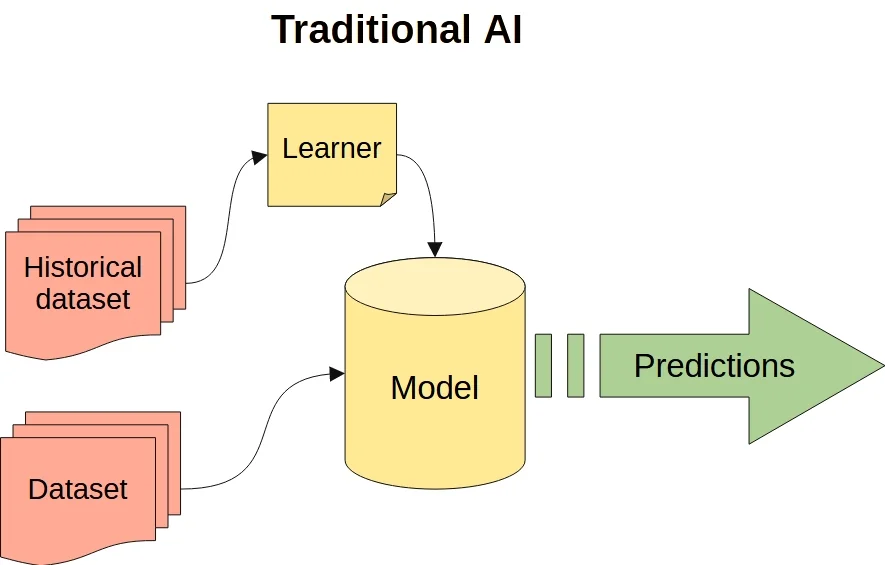
Predictive AI analyzes historical data to forecast future events, unlike generative AI which creates new content. This distinction matters because financial markets require precision, not creativity.
Predictive AI involves using statistical analysis and machine learning to identify patterns, anticipate behaviors, and forecast upcoming events. It functions as an oracle, looking backward to see forward. Generative AI, by contrast, looks at a prompt and creates something new. In trading, you don't want a model to invent a price; you want it to calculate the probability of one.
This foundation relies on backtesting and MLOps to ensure accuracy. The goal is to reduce uncertainty, not to generate text or images. Understanding this difference is the first step in building a reliable strategy.
Comparing prediction infrastructure
Building a reliable prediction engine requires choosing the right infrastructure layer. The landscape splits into two distinct approaches: traditional cloud platforms that offer managed machine learning services, and specialized onchain tools that leverage decentralized data oracles for transparent, automated settlement.
Cloud-based solutions like Microsoft AI Builder and IBM Watson provide robust environments for training forecasting models. These platforms handle the heavy lifting of data preprocessing and model selection, making them ideal for enterprise backtesting and internal risk assessment. They rely on centralized data sources and proprietary algorithms, which simplifies integration but introduces opacity regarding how predictions are generated.
In contrast, onchain prediction infrastructure uses smart contracts and decentralized oracles to execute forecasts. This approach prioritizes verifiability and automation. While it may lack the nuanced customization of cloud ML pipelines, it offers immutable audit trails and reduces counterparty risk in high-stakes financial settlements. The choice depends on whether your priority is model sophistication or execution transparency.
| Platform | Infrastructure Type | Data Source | Best Use Case |
|---|---|---|---|
| Microsoft AI Builder | Cloud Platform | Centralized Enterprise Data | Internal backtesting and forecasting |
| IBM Watson | Cloud Platform | Centralized Enterprise Data | Complex predictive analytics |
| Chainlink Functions | Onchain Oracle | Decentralized Offchain Data | Automated onchain settlement |
| UMA Protocol | Onchain Oracle | Decentralized Data & Dispute | Verifiable financial settlements |
Tracking Market Sentiment with Charts
Technical analysis provides the visual framework for validating AI-generated forecasts. While models predict probabilities, charts reveal the market's actual reaction to those signals. Integrating backtesting data with live sentiment indicators helps filter noise from genuine trend shifts.
We rely on provider-backed tools to ensure data integrity. Static screenshots often obscure real-time volatility, so we use live TradingView charts to track price action alongside prediction milestones. This approach keeps the analysis grounded in current market conditions rather than historical artifacts.
The chart below visualizes Bitcoin's movement against AI sentiment scores. Notice how the model's directional calls align with volume spikes. This correlation is essential for high-stakes decision-making, allowing traders to confirm whether an AI oracle is leading or lagging the market.
Selecting the right prediction tools
Choosing the right tool depends on your data volume and technical comfort. For most financial and operational forecasting, you need a platform that handles backtesting and model training without requiring you to write code from scratch.
Low-Code Platforms for Quick Deployment
Microsoft Power Platform’s AI Builder offers a straightforward way to create prediction models. It integrates directly with Excel and Dataverse, making it ideal for teams that need to forecast sales or inventory trends without building a data warehouse first. You upload your historical data, select the target column, and the platform handles the regression analysis. This approach reduces the time from data to insight, allowing you to validate hypotheses quickly.
Specialized Tools for Content and Market Signals
If your predictions focus on content performance or market sentiment, specialized tools like Quuu’s AI prediction engine can help. These tools use machine learning to forecast engagement metrics before you publish. They are less about raw financial data and more about behavioral patterns, offering a different layer of insight for marketing strategies.
Essential Reading for Implementation
To build a robust strategy, understanding the underlying mechanics of these tools is essential. The following resources provide practical guidance on implementing AI-driven forecasting in a professional setting.


As an Amazon Associate, we may earn from qualifying purchases.
Building your prediction workflow
A prediction model is only as reliable as the data pipeline feeding it. Before you select an algorithm, you need a structured workflow that separates signal from noise. This process turns raw market data into actionable forecasts.
Start with clean, historical data. Predictive AI relies on past patterns to forecast future events, so your data quality is the foundation of every prediction. Ensure your datasets are free of gaps and normalized for the specific asset you are tracking.
Choose an algorithm that matches your data structure. Linear regression works for simple trends, while more complex neural networks handle high-frequency trading data. Avoid generic tools; pick models that have proven accuracy in your specific market niche.

Backtesting is non-negotiable. Run your model against historical data to see how it would have performed in past market conditions. This step reveals overfitting and helps you adjust parameters before risking real capital. Without this, you are just guessing.
Static data expires quickly. Connect your workflow to provider-backed widgets for live prices and charts. This ensures your predictions are based on current market sentiment, not stale information from yesterday’s close.
Markets change, so your model must adapt. Set up continuous monitoring to track prediction accuracy against actual outcomes. When performance drops, revisit your data sources and retrain the model to maintain edge.
No comments yet. Be the first to share your thoughts!