Generative vs. Predictive AI
To build reliable AI infrastructure, you must distinguish between creating content and forecasting outcomes. Generative AI uses data to produce new assets like text or images, while predictive AI infers likely future events based on historical patterns. This distinction dictates the technical architecture required for each workload.
Generative models prioritize creativity and synthesis, excelling at drafting emails or generating visual assets. They are not inherently designed for precision forecasting. Predictive models, conversely, are built for accuracy and probability. They analyze vast datasets to identify trends and predict specific outcomes, such as stock movements, customer churn, or supply chain disruptions.
The demand for robust predictive capabilities is reshaping the sector. According to Fortune Business Insights, the market size is expected to expand from USD 75.40 billion in 2026 to USD 497.98 billion by 2034, with a compound annual growth rate (CAGR) of 26.60%. This growth underscores the strategic shift toward infrastructure that supports accurate, real-time prediction rather than just content generation.
For 2026, the focus must be on building systems that prioritize data integrity, low-latency processing, and model accuracy. This means investing in specialized hardware, such as GPUs optimized for inference, and software frameworks that support predictive modeling. By understanding the core differences between generative and predictive AI, you can design an infrastructure that delivers reliable, actionable insights.
The hardware and software layers of prediction stacks
Building a prediction stack requires more than just raw compute; it demands a tightly integrated stack of hardware and software layers. At its core, this infrastructure consists of specialized hardware—such as GPUs and TPUs—and the software frameworks needed to create, deploy, and manage AI workloads at scale [IBM]. Without this foundation, predictive models remain theoretical rather than operational.
The market for these components is expanding rapidly. This surge is driven by the increasing demand for high-stakes predictive models in finance, healthcare, and logistics, where latency and accuracy are non-negotiable.
To support these models, organizations must focus on compute density and data pipeline efficiency. High-density GPUs allow for parallel processing of massive datasets, while optimized data pipelines ensure that information flows seamlessly from source to model. This integration reduces the time between data ingestion and prediction, a critical factor in real-time decision-making environments.
The financial implications of this infrastructure are significant, as reflected in the performance of related market indices. The Semiconductor Industry Association (SMH) ETF, which tracks key players in the semiconductor sector, serves as a proxy for the health of AI hardware investments.
Investing in the right hardware and software components is not just about keeping up with trends; it is about building a resilient foundation for future innovations. As AI predictions become more sophisticated, the underlying infrastructure must evolve to support higher complexity and greater scale.
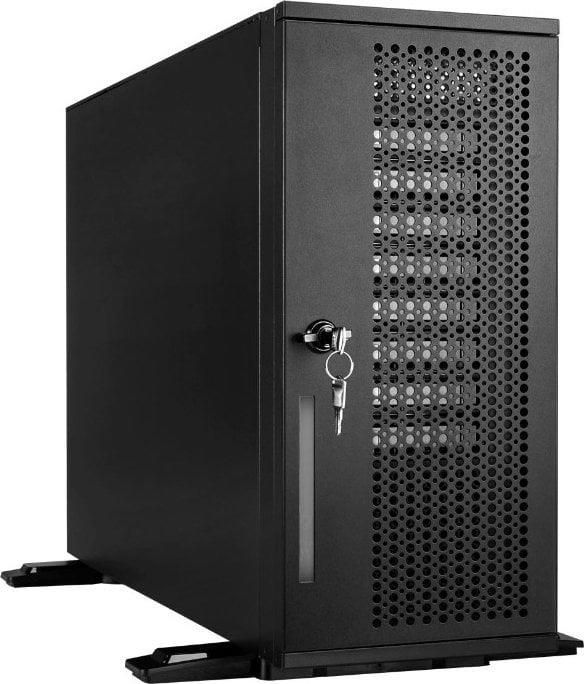


As an Amazon Associate, we may earn from qualifying purchases.
Architecture trade-offs in prediction infrastructure
Building prediction infrastructure requires choosing between centralized cloud models and edge-based deployments. The decision hinges on latency requirements, data sovereignty, and operational cost. While the sector is projected to grow significantly, the architectural choice determines whether your system can handle real-time inference or batch processing effectively.
Centralized architectures offer superior model training capabilities and access to massive computational resources. This approach is ideal for complex, heavy-lift tasks where latency is less critical than accuracy. However, it introduces network dependency and higher data transfer costs.
Edge-based architectures prioritize low latency and data privacy by processing information closer to the source. This is essential for industrial IoT and smart city applications where immediate response times are mandatory. The trade-off is reduced computational power for individual nodes and more complex management overhead.
The table below compares these two primary architectural approaches across key performance indicators relevant to prediction infrastructure.
| Metric | Centralized Cloud | Edge-Based | Hybrid |
|---|---|---|---|
| Latency | High (Network dependent) | Low (Local processing) | Variable |
| Data Privacy | Lower (Data egress) | Higher (Local retention) | Moderate |
| Compute Scalability | Elastic & Unlimited | Constrained by hardware | Balanced |
| Cost Structure | High OpEx (Bandwidth) | High CapEx (Hardware) | Optimized |
| Use Case Fit | Batch Analytics, Training | Real-time Inference | Mixed Workloads |
Most modern implementations adopt a hybrid model to balance these trade-offs. Heavy training occurs in the cloud, while lightweight inference runs at the edge. This strategy allows organizations to leverage the scale of centralized resources without sacrificing the responsiveness required for real-time prediction tasks.
Market Growth and Investment Signals
The capital flowing into prediction infrastructure is no longer speculative; it is structural. The global AI infrastructure market size is projected to grow from USD 75.40 billion in 2026 to USD 497.98 billion by 2034, exhibiting a CAGR of 26.60% during the forecast period Fortune Business Insights. This trajectory signals a shift from experimental pilots to foundational deployment.
Investors are tracking this expansion through specialized ETFs that bundle the hardware, software, and data center requirements necessary for large-scale prediction models. The underlying demand is driven by the physical constraints of computing power and energy, which are becoming the primary bottlenecks for scaling these systems.
To gauge real-time sentiment and liquidity in this sector, investors often monitor key infrastructure indices. The widget below reflects current market pricing for a representative AI infrastructure ETF, providing a live pulse on institutional confidence in this growth vector.
Strategic implementation steps
Building reliable prediction infrastructure requires more than just buying compute power. It demands a disciplined approach to data quality and risk management. If your input data is noisy, your predictions will be flawed, regardless of the model's sophistication.
Start by establishing strict data governance protocols. Clean, labeled datasets are the foundation of any predictive system. Without them, even the most advanced algorithms will fail to generalize across different scenarios. This means investing in automated validation pipelines that catch anomalies before they enter the training loop.
Risk management should be baked into the deployment phase, not added as an afterthought. Implement shadow testing to compare AI predictions against human baselines in real-time. This allows you to identify drift or bias before the system impacts live operations. The goal is to create a feedback loop where errors are quickly detected and corrected.

Consider the emerging applications in physical infrastructure as a testbed. Researchers have already demonstrated that AI can accurately predict moisture damage in materials, enabling better maintenance planning. Similarly, AI-generated flood models are helping civil engineers assess risk by rapidly processing multiple environmental scenarios. These use cases highlight the importance of domain-specific data integration.
The sector is projected to reach nearly $500 billion by 2034. This growth underscores the need for strategic, rather than reactive, implementation. Focus on building a robust foundation that prioritizes accuracy and safety over speed.
Common questions on prediction infrastructure
Investors and engineers often ask what the market actually expects for the coming decade. The rapid expansion underscores the capital intensity required to build robust prediction systems.
What is the prediction for AI infrastructure?
The consensus points toward massive scaling. As noted by industry analysts, the infrastructure supporting these models will likely double in capacity every few years. This isn't just about bigger servers; it's about specialized chips and energy-efficient cooling systems that can handle the heat generated by dense computation.
How much does it cost to build?
Building a single large-scale data center for AI workloads can exceed $1 billion. The cost isn't just hardware; it includes the land, power connections, and the physical security needed to protect sensitive algorithms. Smaller firms often lease capacity rather than build, opting for cloud providers who spread these fixed costs across thousands of clients.
Will AI replace human analysts?
AI augments rather than replaces. While algorithms can process data faster than any human, they lack the contextual understanding to interpret market anomalies or regulatory shifts. The most effective prediction infrastructure combines automated signal processing with human strategic oversight, creating a hybrid model that reduces bias and error.
No comments yet. Be the first to share your thoughts!