Define your prediction scope
Before writing a single line of infrastructure code, you must define the boundaries of your prediction problem. In high-stakes financial and operational environments, scope creep is the primary cause of wasted compute and delayed deployment. A vague objective like "predict market trends" is too broad to engineer. You need a specific, measurable target that ties directly to a business decision.
Start by asking a single, hard question: What decision improves if this prediction is 1% more accurate? If you cannot answer this, the infrastructure is not ready. This clarity prevents the common trap of building complex models for low-value outcomes. For example, predicting customer churn three months in advance allows for targeted retention campaigns, whereas predicting it three days in advance may be too late to act. The value lies in the lead time and the actionability of the insight, not just the model's accuracy.
Callout
Start with the question: What decision improves if this prediction is 1% more accurate?
Next, assess data availability against this scope. AI prediction infrastructure is only as robust as the data pipelines feeding it. If your target variable requires data sources that are fragmented, delayed, or unstructured, your scope must shrink or your data strategy must shift first. Do not assume that available historical data is sufficient for the specific granularity you need. Verify that the latency, volume, and quality of your data streams align with the frequency of the predictions you intend to make.
This initial scoping phase is not just a planning exercise; it is a risk mitigation strategy. By locking in the scope and data constraints early, you avoid the costly mistake of building a sophisticated prediction engine that solves the wrong problem or lacks the necessary fuel to run. Keep the scope tight, the data sources verified, and the business impact clear.
Select the right hardware stack
Your prediction infrastructure starts with the hardware beneath it. Cloud GPU instances, on-premise servers, and edge nodes each serve different latency and cost needs. The right choice depends on how quickly your models must respond and how much data you process daily.
Cloud providers offer immediate scalability. You pay for what you use, which works well for variable workloads. On-premise hardware requires upfront capital but offers predictable long-term costs. Edge devices minimize latency for time-sensitive predictions.
| Metric | Cloud GPU | On-Premise | Edge Node |
|---|---|---|---|
| Latency | 10-50ms | <5ms | <1ms |
| Cost Model | Pay-per-use | CapEx heavy | Low OpEx |
| Scalability | Instant | Manual | Limited |
| Data Privacy | Shared | Isolated | Local |
| Best For | Bursty workloads | Stable high-volume | Real-time inference |
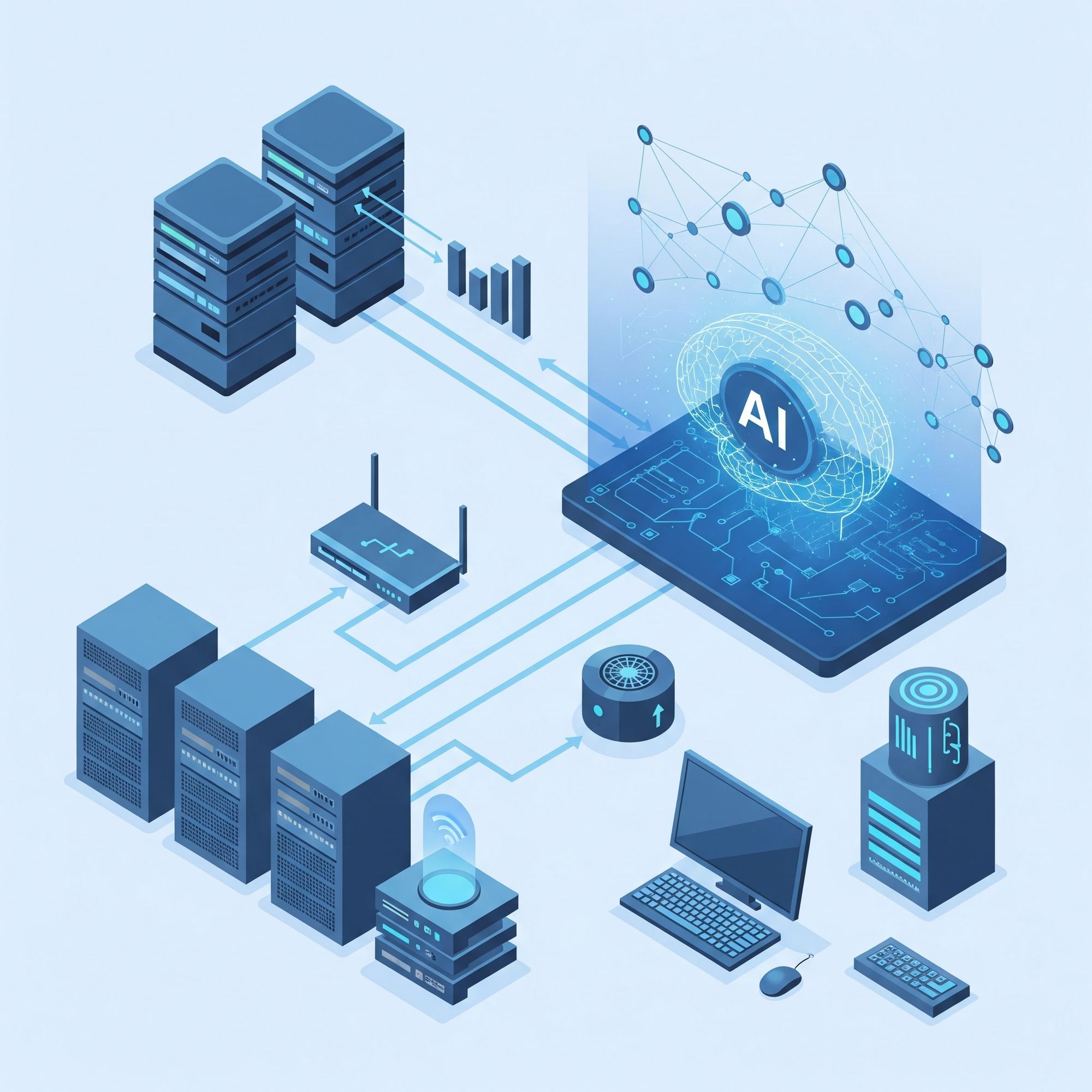
AI infrastructure consists of the hardware and software needed to create, deploy and manage AI-powered applications and workloads, according to IBM. Your hardware stack must align with your prediction latency requirements. Financial trading systems need edge nodes for sub-millisecond decisions. Batch prediction models can tolerate cloud latency.
The AI infrastructure market continues to outpace expectations, finishing 2025 with $337 billion in aggregate revenue, according to S&P Global. This growth reflects the increasing complexity of prediction workloads. Choose hardware that scales with your data volume without compromising response times.
Integrate real-time data feeds
Your prediction model is only as good as the information it consumes. If the feed is stale, the prediction is a guess. Connecting live data sources—whether high-frequency market ticks or IoT sensor streams—requires treating data ingestion as a critical infrastructure layer, not an afterthought.
The goal is to bridge the gap between raw data and the prediction engine with minimal latency. This section outlines the practical steps to establish that connection reliably.
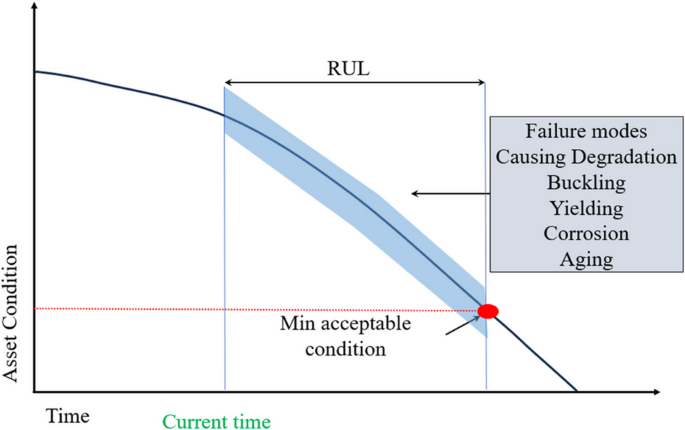
Start by selecting the right protocol for your data source. For high-frequency financial markets, WebSocket connections are standard for maintaining persistent, low-latency streams. For IoT sensor data, MQTT or HTTP/2 often provide the necessary reliability and bandwidth efficiency. Choose the protocol that matches the velocity and volume of your data to avoid bottlenecks before the data even reaches your server.
Raw data is messy. Implement a message queue (like Kafka or RabbitMQ) to buffer incoming streams. This decouples the ingestion layer from the prediction engine, allowing you to handle spikes in data volume without crashing the model. Ensure your pipeline includes error handling for dropped packets or malformed JSON, which are common in live feeds.
Before the data enters your model, it must be cleaned and normalized. Apply schema validation to ensure every incoming record matches the expected structure. Transform timestamps to UTC and handle missing values immediately. This step prevents "garbage in, garbage out" scenarios that can silently degrade prediction accuracy over time.
Set up monitoring for data freshness and latency. If your prediction engine is receiving data that is more than a few seconds old, it may be acting on outdated information. Use metrics to track the time between data generation and ingestion. Alert your team if latency exceeds your defined thresholds, as this often indicates infrastructure strain.
Integrating these feeds is not just a technical task; it is a risk management exercise. As AI workloads grow, the infrastructure supporting them must be robust enough to handle the increased power and data demands without failure. A well-integrated feed ensures your predictions remain relevant and actionable in real-time.
-
Protocol selected (WebSocket/MQTT)
-
Message queue configured
-
Schema validation enabled
-
Latency monitoring active
-
Error alerting set up
Choose prediction tools and models
Building a prediction infrastructure in 2026 requires a pragmatic split between open-source flexibility and proprietary reliability. The industry is moving toward specialized models rather than one-size-fits-all generalists. As noted in Sapphire Ventures' 2026 outlook, enterprise infrastructure is shifting toward tools that offer specific, high-accuracy outputs for defined financial or operational tasks sapphireventures.com.
Select the Right Model Class
For high-stakes financial forecasting, rely on fine-tuned open-source models like Llama 3 or Mistral. These allow you to keep sensitive data on-premise, which is critical for compliance. Use proprietary APIs only for non-sensitive, high-volume data processing where latency matters more than data privacy. The goal is to balance cost with control.
Infrastructure Hardware
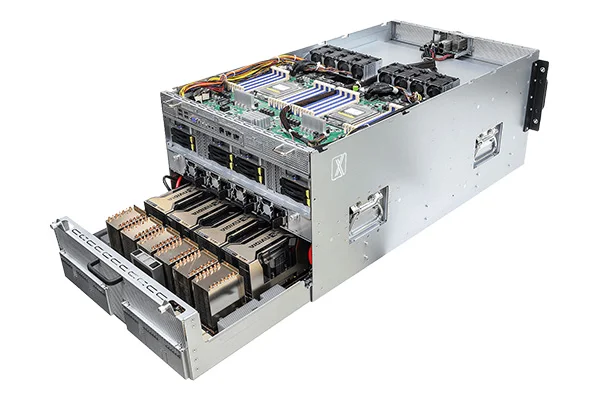
Prediction models require significant compute. Ensure your hardware stack can handle the inference load. Below are tools and hardware components commonly used in 2026 infrastructure builds.


As an Amazon Associate, we may earn from qualifying purchases.
Integration and Monitoring
Finally, choose tools that integrate seamlessly with your existing data pipelines. Look for frameworks that support real-time monitoring and automatic retraining. This ensures your predictions remain accurate as market conditions shift. Avoid legacy systems that cannot handle the velocity of modern data streams.
Test for bias and drift
A model that performs well today can become a liability tomorrow. In financial and operational contexts, this decay isn't just a technical glitch; it translates directly to lost revenue, regulatory penalties, or failed transactions. Monitoring for bias and drift is not a one-time setup task but a continuous discipline required to keep your infrastructure viable.
Bias emerges when your training data systematically excludes certain groups or outcomes, leading to unfair or inaccurate predictions. Drift occurs when the real-world data your model encounters diverges from what it was trained on, causing performance to degrade silently over time. Without active monitoring, these issues compound, often going unnoticed until significant damage has occurred.
To prevent this, you need a structured pre-deployment and post-deployment checklist. This ensures that both data integrity and model stability are validated before and after launch.
-
Validate training data for historical biases and representation gaps
-
Establish baseline performance metrics on a hold-out test set
-
Set up automated alerts for data drift (input distribution changes)
-
Schedule weekly reviews of prediction accuracy against ground truth
-
Document model versioning and retraining triggers for audit trails
Implementing these checks creates a feedback loop. When drift is detected, you can trigger retraining with fresh data. When bias is identified, you can adjust the training set or apply fairness constraints. This proactive approach keeps your AI systems reliable, compliant, and aligned with business goals.
Common prediction infrastructure: what to check next
Building AI prediction systems involves more than just model accuracy. You are managing complex trade-offs between cost, latency, and reliability. Here are answers to the most frequent high-stakes questions.
No comments yet. Be the first to share your thoughts!