
Ai-generated prediction market research budget
Running a serious AI trading operation requires capital in three distinct buckets: the compute hardware, the software intelligence, and the liquidity buffer. The top 1% of traders on platforms like Polymarket capture more than three-quarters of all gains, meaning your infrastructure must be fast enough to act on AI signals before the market prices them in [1].
Compute and Data Infrastructure
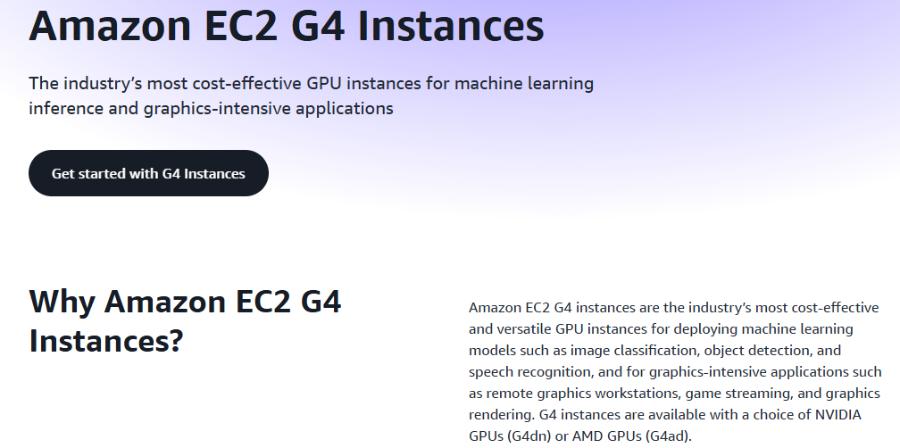
AI models don't run on standard laptops. You need dedicated GPUs for real-time inference, especially when aggregating data from multiple sources. A mid-range NVIDIA RTX 4090 or a cloud-hosted A100 instance provides the necessary throughput to process news feeds and historical data simultaneously without latency.
| Component | Purpose | Estimated Monthly Cost |
|---|---|---|
| GPU Instance (Cloud) | Real-time AI inference | $500 - $2,000 |
| Data API Access | News, sentiment, on-chain data | $100 - $500 |
| Local Rig (One-time) | Backup processing power | $2,500 - $4,000 |
Software and Tooling
While open-source models like Llama 3 offer a starting point, proprietary tools often provide the edge needed for prediction markets. Extensions like Polyprophet use multiple AI models to generate real-time predictions for Polymarket, leveraging historical data to refine probability estimates [2]. You should budget for premium API access and potentially custom script development to integrate these signals into your trading execution.
Liquidity and Risk Buffer
Hardware and software are fixed costs; liquidity is variable. AI models can be wrong, and prediction markets are volatile. Reserve at least 6-12 months of operating expenses in stablecoins to cover API costs, gas fees, and potential drawdowns. Never allocate your entire capital to AI-driven trades without a human-in-the-loop verification step.

As an Amazon Associate, we may earn from qualifying purchases.
Compare ai prediction market tools
Choosing the right infrastructure for onchain forecasting depends on whether you need real-time trading assistance or rigorous academic benchmarking. The market currently splits between browser extensions designed for active Polymarket traders and broader platforms that aggregate data from multiple AI models.
Real-time trading assistants
Polyprophet stands out as a specialized Chrome extension built specifically for Polymarket. It integrates multiple leading AI models with proprietary historical data to generate real-time predictions directly in your browser. This tool is designed for traders who want immediate, data-backed signals rather than manual analysis of polling data.
Aggregated forecasting platforms
For a broader view, platforms like Metaculus and ForeNex challenge traditional gambling-driven models by prioritizing data integrity over speculation. These platforms serve as battlegrounds where AI forecasting meets public polling, offering a more structured environment for long-term event prediction. They are better suited for researchers or investors looking for consensus forecasts rather than high-frequency trading edges.
AI benchmarking benchmarks
The Prediction Arena benchmark, introduced in recent arXiv research, provides a standardized way to evaluate AI models on real-world prediction markets. By enabling AI agents to trade directly, it measures predictive accuracy and decision-making capabilities. This is the primary reference point for developers building new AI trading bots.
| Tool | Type | Primary Focus | Best For |
|---|---|---|---|
| Polyprophet | Browser Extension | Real-time Polymarket signals | Active traders |
| Metaculus | Aggregator | Data-driven forecasting | Long-term research |
| ForeNex | Platform | Polling vs. market data | Macro analysis |
| Prediction Arena | Benchmark | AI model accuracy | Developers |
Inspect the expensive parts
Before you deploy capital in AI-generated prediction markets, audit the infrastructure. A single misconfigured oracle or liquidity gap can drain a position faster than a bad read on the news. Treat your setup like a supply chain: if one node fails, the whole chain breaks.
Verify oracle latency and reliability
Prediction markets rely on external data feeds to resolve outcomes. If an oracle is slow or manipulated, your bet resolves at the wrong price or not at all. Check if the market uses a decentralized oracle network (like Chainlink) or a single trusted source. Single sources are the first point of failure. Look for markets that publish their oracle latency metrics publicly.
Audit liquidity depth
High volatility is the norm in AI-driven markets. Thin order books mean you can’t exit a position without slipping 10-20% of your capital. Inspect the top 50 levels of the order book. If the spread is wide or the depth drops off after $500, avoid the market. Stick to markets with at least $50,000 in total liquidity across all outcomes.
Test slippage on small stakes
Never bet your full stack on a new platform. Place a $10 test bet and immediately try to exit it. Measure the difference between the mid-price and your execution price. If slippage exceeds 2%, the market is too illiquid for serious trading. Document this metric for every market you consider.
Check for AI model drift
AI prediction models degrade over time as conditions change. Platforms that don’t retrain their models weekly or monthly will give stale probabilities. Look for platforms that disclose their model update frequency. If they haven’t updated their model in 30 days, the odds are likely disconnected from reality.
Review withdrawal friction
The most expensive part of a failed bet is getting your money out. Some platforms impose hidden fees or long withdrawal windows. Check the terms for withdrawal limits and processing times. If a platform requires manual approval for withdrawals over $100, it’s a red flag. Prefer platforms with automated, instant withdrawals for verified users.
The Real Cost of Ownership
A low entry price on a prediction market tool or hardware wallet often masks the ongoing expenses that erode profits. Ownership costs extend far beyond the initial purchase, encompassing subscription fees for premium AI data feeds, transaction gas fees for on-chain settlement, and the time required to manage security keys. When these recurring expenses accumulate, a "cheap" tool can quickly become more expensive than a higher-quality alternative with better long-term value.
Maintenance surprises are common in the prediction market space. Tools that rely on real-time API connections to platforms like Polymarket may require frequent updates to remain compatible with protocol changes. If you are using hardware for cold storage, battery degradation and firmware compatibility issues can create unexpected hurdles. Always factor in the cost of these potential interruptions when evaluating a tool's total cost of ownership.
When Cheap Stops Being Cheap
Consider the trade-off between upfront cost and long-term reliability. A budget-friendly AI prediction aggregator might save you $50 initially but charge $20/month for data access. Over two years, that $50 saving turns into a $430 loss. Similarly, a cheap hardware wallet that lacks robust community support or clear documentation can lead to costly security mistakes or lost access.


As an Amazon Associate, we may earn from qualifying purchases.
The most expensive mistake is not paying enough attention to the fine print. Check for hidden fees in subscription models, such as overage charges for data usage or cancellation penalties. For hardware, verify the warranty terms and whether replacement parts are available. By understanding these costs upfront, you can choose a solution that remains affordable and effective throughout its lifecycle.
Ai-generated prediction market research: what to check next
Forecasting tools are only as good as the data they process and the logic they apply. Before committing capital to onchain markets, it helps to understand how AI models compare to human traders and what specific risks they introduce to your strategy.
No comments yet. Be the first to share your thoughts!