AI Infrastructure Market Size and Growth Trajectory
The AI infrastructure market is expanding rapidly, reshaping the technology sector. Current estimates place the global market value at approximately $60 billion for this year, with projections indicating it will reach $223.45 billion by 2030. This growth represents a compound annual growth rate (CAGR) of roughly 26.6% through 2034, signaling a sustained shift in capital allocation toward the foundational layers of artificial intelligence.
This trajectory validates the investment thesis for 2026. The infrastructure required to support generative AI—spanning data centers, specialized semiconductors, and high-speed networking—is no longer a speculative niche. It has become a critical utility. The scale of this market suggests that the demand for compute power will continue to outpace general IT spending for the foreseeable future.
The concentration of investment in this sector highlights a clear divergence from traditional hardware cycles. While consumer electronics face saturation, enterprise-grade AI infrastructure is in its early innings. This disparity creates a unique opportunity for stakeholders who can manage the complexities of supply chains and technological bottlenecks. The market's resilience is underpinned by the relentless adoption of large language models and autonomous systems, which require ever-increasing computational resources.
Core infrastructure layers for predictive AI
Predictive AI doesn't run on code alone. It sits on a stack of specialized hardware and data flows that must move faster than the market does. When you strip away the marketing, the infrastructure breaks down into three non-negotiable layers: compute for inference, storage for low-latency access, and pipelines for real-time ingestion.
Compute: The Inference Engine
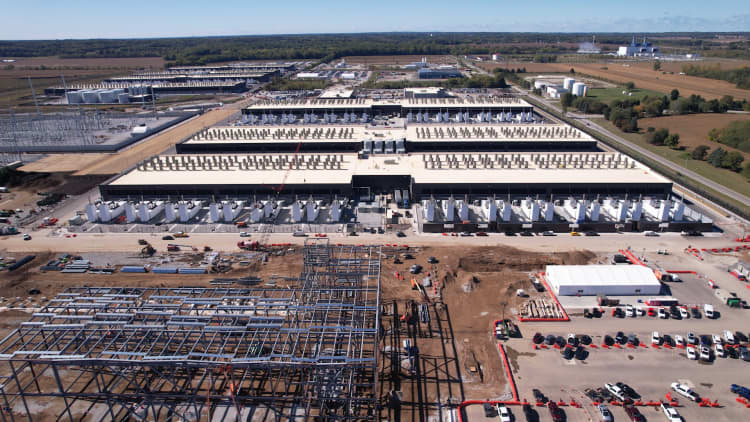
Training models is expensive, but inference is where the money is made. In 2026, the bottleneck isn't just raw GPU power; it's the efficiency of moving data to the GPU. Providers like NVIDIA and AMD are racing to build chips that can handle massive parallel workloads without overheating or draining data center power grids. The focus has shifted from pure floating-point operations to memory bandwidth and interconnect speed. If your inference layer can't serve predictions in milliseconds, the model is useless to a high-frequency trader or an automated risk system.
Storage: The Data Foundation
Predictive models require access to historical and real-time data simultaneously. Traditional databases are too slow for this dual demand. Modern infrastructure uses vector databases and high-throughput object storage to keep training data and live feeds accessible. Aerospike and similar providers emphasize architectures that reduce latency to microseconds, ensuring that the "foresight" generated by AI is based on the most current data possible. Without this speed, predictions are just historical analysis dressed up as intelligence.
Data Pipelines: The Lifeblood
Garbage in, garbage out. The pipeline layer connects raw data sources—market feeds, news APIs, IoT sensors—to the storage and compute layers. These pipelines must handle massive spikes in volume without dropping packets. In financial contexts, a lag of even a few seconds can mean the difference between profit and loss. The infrastructure must be resilient, auto-scaling to handle market volatility while maintaining data integrity.
Market Context
The demand for this infrastructure is driving up valuations for specialized hardware and software providers. The chart below shows the performance of a key player in the AI infrastructure space, reflecting the market's confidence in this sector's growth.
Civil engineering and finance use prediction infrastructure to manage risk
Predictive AI infrastructure is moving from experimental labs into the backbone of high-stakes industries. In civil engineering, the focus is on preventing catastrophic failure before it happens. Researchers have developed algorithms that can accurately predict moisture damage in concrete and other materials, allowing for better material selection and maintenance planning. This capability transforms infrastructure management from reactive repairs to proactive preservation, significantly extending the lifespan of critical assets.
The Federal Highway Administration and other transportation authorities are increasingly relying on AI-based prediction models to manage transportation infrastructure networks. These systems analyze vast amounts of sensor data to forecast asset degradation, ensuring that limited public funds are directed where they are most needed. By anticipating structural weaknesses, engineers can keep roads and bridges safe without waiting for visible signs of decay.
In finance, the stakes are equally high. While the underlying technology differs, the goal remains the same: using historical data to predict future outcomes with precision. Predictive models help institutions manage volatility, assess credit risk, and detect fraud in real-time. The infrastructure supporting these models must be robust, scalable, and secure, capable of processing millions of transactions per second.
The convergence of these sectors highlights a broader trend: prediction infrastructure is becoming a utility as essential as electricity or water. As algorithms grow more sophisticated, the ability to anticipate and mitigate risk will define competitive advantage in both engineering and finance.
Strategic implementation checklist
Deploying AI prediction infrastructure is less about buying the fastest GPU and more about building a reliable data pipeline. Enterprises often underestimate the cost of data preparation, which can consume up to 80% of the project timeline. To avoid costly rework, follow this ordered workflow to evaluate, select, and deploy your infrastructure.
Before selecting hardware, map your data sources. Determine if your use case requires real-time streaming or batch processing. High-frequency trading models, for example, demand microsecond latency, while predictive maintenance can tolerate hourly updates. This distinction dictates whether you need edge computing or centralized cloud warehouses.

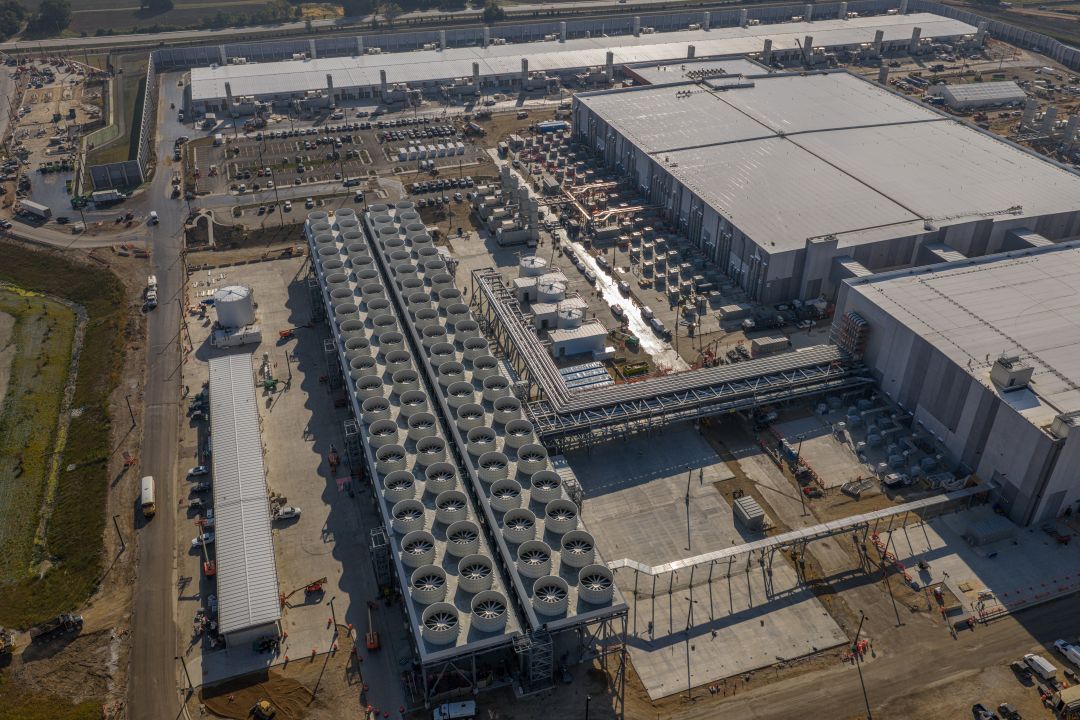
Match your hardware to the inference workload. Large language models benefit from specialized tensor cores, while traditional time-series forecasting may run efficiently on standard CPUs. Evaluate total cost of ownership (TCO) including energy consumption and cooling, as data center costs are rising with AI density.
Models drift over time as market conditions change. Implement continuous integration and deployment (CI/CD) pipelines for ML models to ensure they are retrained with fresh data. Monitor key performance indicators like prediction accuracy and inference time to catch degradation early.

Financial data is highly sensitive. Ensure your infrastructure supports role-based access control (RBAC) and encrypts data at rest and in transit. Verify that your provider complies with relevant regulations such as GDPR or SEC guidelines for record-keeping and audit trails.
For teams looking to upskill or set up initial testing environments, here are some recommended resources and tools to get started with AI infrastructure development.


As an Amazon Associate, we may earn from qualifying purchases.
No comments yet. Be the first to share your thoughts!