Define your prediction scope
Before you provision a single GPU or ingest a single data stream, you must narrow your focus. "AI-generated prediction" is a broad umbrella that covers everything from weather forecasting to supply chain logistics. In finance, the infrastructure requirements for predicting crypto volatility are radically different from those needed to model equity earnings.
Start by selecting one high-value use case. Are you building a system to predict short-term price movements in Bitcoin, or are you focused on long-term valuation models for S&P 500 components? The choice dictates your data latency needs, your model architecture, and your risk controls. A system built for high-frequency crypto trading cannot easily be repurposed for quarterly earnings analysis, and vice versa.
Note: AI-generated prediction in finance requires strict data governance, not just model access. The quality of your infrastructure is only as good as the integrity of the data feeding it.
Once you have locked in your specific domain, you can begin selecting the right tools. For example, if you are targeting crypto, you will need infrastructure that handles 24/7 data ingestion and low-latency execution. If you are targeting equities, your infrastructure must prioritize compliance, audit trails, and integration with traditional market data providers like Bloomberg or Refinitiv.
Defining this scope early prevents costly re-architecture later. It ensures that your AI-generated prediction infrastructure is built for relevance, not just raw compute power. Take the time to map out the specific variables, data sources, and output formats required for your chosen use case. This clarity will serve as the blueprint for every technical decision that follows.
Select your data pipeline tools
Your AI-generated prediction infrastructure is only as reliable as the data feeding it. Generic web scraping is no longer sufficient for high-stakes financial decisions; it introduces latency, noise, and compliance risks that can derail real-time inference. You need specialized ingestion tools that provide clean, structured, and timely data directly from the source.
Start by distinguishing between off-chain traditional finance (TradFi) data and on-chain blockchain data. Off-chain providers offer deep historical depth for equities, forex, and macro indicators, while on-chain providers give you real-time visibility into wallet movements, liquidity pools, and smart contract interactions. Most robust prediction models combine both, but your initial pipeline must prioritize the asset class you are targeting.
When choosing a provider, focus on three metrics: latency (how fast the data updates), coverage (the breadth of assets and exchanges), and cost (subscription tiers vs. API call limits). Below is a comparison of common data provider categories to help you evaluate your options.
Avoid the trap of buying every data feed available. Start with a minimal viable pipeline: one reliable TradFi source and one on-chain indexer. Validate the data integrity by comparing your pipeline’s output against the provider’s official dashboard. Once your model demonstrates consistent accuracy, you can expand to lower-latency direct exchange feeds or specialized sentiment APIs.
Deploy the prediction models
Deploying AI-generated prediction models into production is where theory meets the harsh reality of latency and reliability. In high-stakes financial environments, a model that takes ten seconds to return a forecast is useless. You need sub-second inference with guaranteed uptime. This section walks you through the concrete steps to integrate your models into the infrastructure, ensuring they perform under pressure.
1. Containerize and version the model
Before deployment, your model must be isolated. Wrap your inference code and dependencies in a Docker container. This ensures consistency across development, staging, and production environments. Use a multi-stage build to keep the image lean, removing unnecessary build tools and reducing the attack surface. Tag every image with a semantic version (e.g., v1.2.0) and a git commit hash. This traceability is non-negotiable when debugging prediction errors in live markets.
2. Set up a high-throughput inference server
Choose an inference framework optimized for speed. For LLMs, consider vLLM or TGI (Text Generation Inference). For traditional ML models, use TorchServe or TensorFlow Serving. Configure the server to handle concurrent requests efficiently. Enable batching if your model supports it, as this can significantly improve throughput without adding noticeable latency per request. Ensure the server exposes a REST or gRPC endpoint that your application can call reliably.
3. Implement a robust API gateway
Place an API gateway in front of your inference server. This layer handles authentication, rate limiting, and request routing. For financial predictions, rate limiting is critical to prevent resource exhaustion during market volatility. Configure timeouts strictly; if a prediction takes longer than your SLA allows, fail fast. This prevents cascading failures in your application. Use health checks to ensure the gateway only routes traffic to healthy instances.
4. Add monitoring and observability
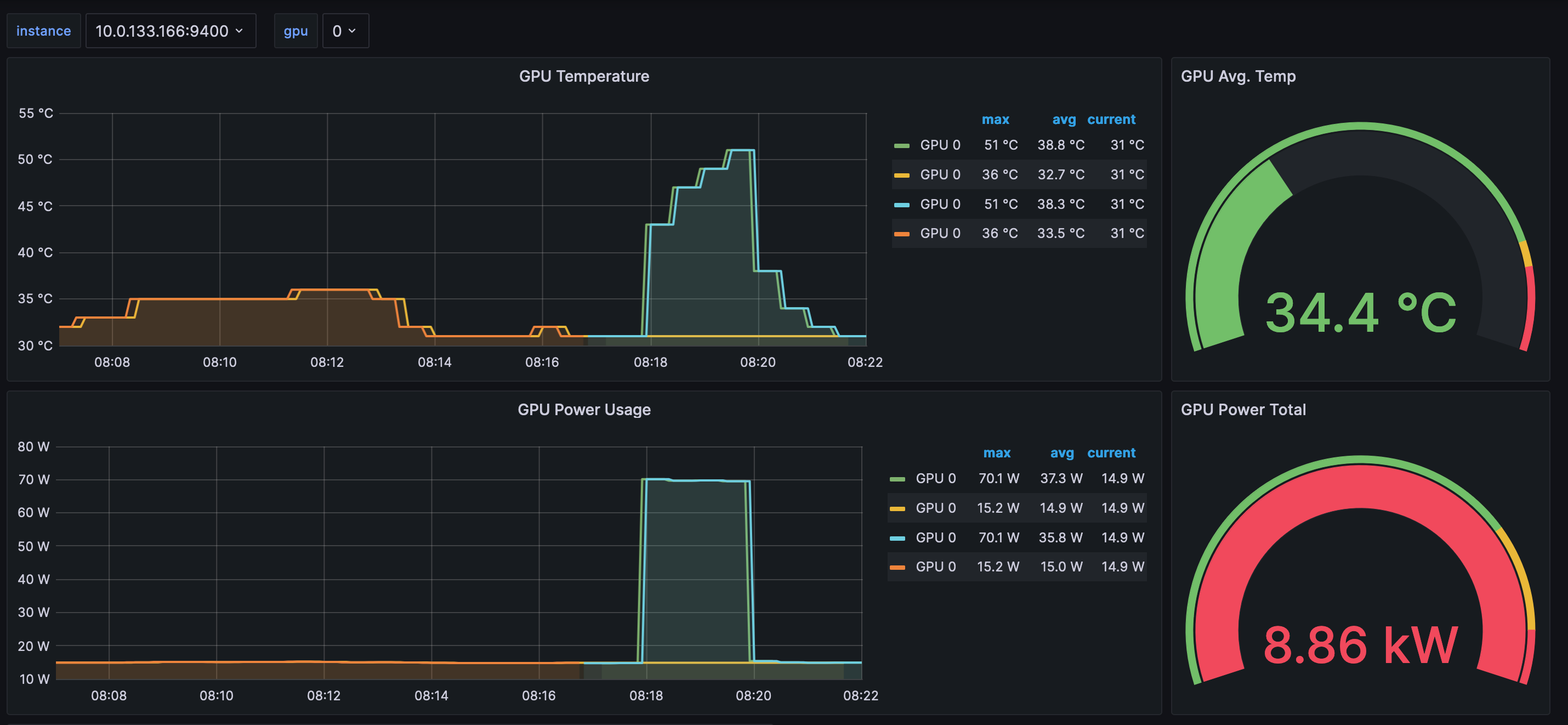
You cannot manage what you do not measure. Instrument your inference server with metrics for latency, throughput, and error rates. Track prediction drift over time. If the model’s output distribution shifts significantly, it may indicate data quality issues or market regime changes. Use tools like Prometheus and Grafana for real-time dashboards. Set up alerts for anomalies, such as a sudden spike in latency or a drop in prediction confidence scores.
5. Configure auto-scaling and failover
Market activity is unpredictable. Configure your infrastructure to auto-scale based on request volume. Use horizontal pod autoscaling (if using Kubernetes) or serverless auto-scaling to handle spikes. Implement failover mechanisms to switch to a secondary region or a fallback model if the primary service degrades. This redundancy ensures your prediction infrastructure remains available even during partial outages.
6. Validate with shadow deployment
Before routing live traffic, run a shadow deployment. Mirror incoming requests to the new model without sending its predictions to the user. Compare the new model’s outputs against the current production model. This allows you to validate performance and accuracy in a real-world context without risking user experience. If the shadow deployment shows significant deviations or errors, roll back immediately.
7. Establish a rollback procedure
Even with shadow testing, issues can arise. Have a clear, documented rollback procedure. If a new model version causes latency spikes or prediction errors, you should be able to revert to the previous stable version within minutes. Automate this process where possible. Test the rollback procedure regularly to ensure it works under pressure. In financial markets, speed of recovery is as important as speed of prediction.
Validate forecast accuracy
Your AI-generated prediction infrastructure is only as good as its ability to handle the past. If your models cannot accurately reconstruct historical price movements, they will fail when real capital is on the line. This process is called backtesting, and it is the primary defense against the "linear forecast problem"—where models simply extrapolate recent trends without understanding market mechanics.
To validate your infrastructure, you must treat historical data as a rigorous exam, not a training ground. Start by isolating a time period your model has never seen. Run your prediction algorithms against this "out-of-sample" data. If the model performs well here, it has learned generalizable patterns rather than memorizing noise. Compare the predicted values against actual outcomes using metrics like Mean Absolute Percentage Error (MAPE) or Root Mean Squared Error (RMSE). These numbers tell you exactly how far off your infrastructure’s guesses are. A visual check is often faster than a spreadsheet. Use a technical chart to overlay your model’s predictions against actual price action. Look for divergence. If your AI predicts a steady uptrend but the actual price spikes and crashes, your infrastructure is missing volatility signals. This visual alignment helps you spot "linear forecast" failures where the model ignores sudden market shifts.
Once you have validated the model, document the results. Keep a log of every backtest, including the date range, the metrics, and the specific parameters used. This audit trail is essential for high-stakes financial decisions. It proves that your infrastructure is not just a black box, but a tested system with known strengths and weaknesses.
Monitor infrastructure costs
AI infrastructure spending is scaling faster than most forecasts anticipated. The market reached $337 billion in aggregate revenue in 2025, with expectations upgraded for continued growth [src-serp-1]. For prediction infrastructure, this means every API call, data ingestion, and compute cycle carries a tangible price tag that can erode margins if left unchecked.
Managing these expenses requires a shift from reactive billing to proactive governance. Start by implementing strict quotas for high-cost operations like large language model inference. Use caching layers for recurring prediction requests to avoid redundant compute cycles. Monitor GPU utilization rates closely; idle resources are the fastest way to burn budget without generating predictive value.
The operational landscape is becoming harder to predict due to supply chain instability and policy uncertainty [src-serp-4]. To stay ahead, adopt a hybrid approach that balances expensive, high-performance cloud instances with cheaper, spot-market options for non-critical batch processing. This flexibility ensures you maintain prediction quality during peak demand while keeping baseline costs low.
- Real-time spend tracking
- Anomaly detection
- Multi-cloud support

As an Amazon Associate, we may earn from qualifying purchases.
Common AI prediction mistakes
Even with robust infrastructure, prediction models can drift or fail if built on shaky assumptions. The most frequent errors stem from treating AI as a crystal ball rather than a probability engine. Below are the specific pitfalls that derail high-stakes financial and infrastructure forecasts.
Overfitting to recent data
Models trained exclusively on the last 12–24 months of market volatility often fail when conditions normalize. This is known as overfitting: the model memorizes noise instead of learning signal. For AI-generated prediction infrastructure, this means your system might accurately predict a 2025-style market shock but miss a 2026 structural shift. Always validate against out-of-sample data that predates your training window.
Ignoring regulatory limits to account for
AI infrastructure does not operate in a vacuum. Regulations like the EU AI Act or SEC guidelines on algorithmic trading can render a technically perfect model non-compliant overnight. A common mistake is building the prediction layer first and adding compliance checks last. Instead, embed regulatory constraints into your data governance pipeline from day one. This prevents costly re-engineering when audits reveal that your "black box" decisions cannot be explained to regulators.
Assuming linear growth
Many infrastructure forecasts rely on linear CAGR (Compound Annual Growth Rate) models, assuming steady, predictable growth. As noted in industry analyses, this approach ignores the non-linear pressures of power, cooling, and supply chain bottlenecks. AI infrastructure demand often spikes in S-curves, not straight lines. Using linear models for capital expenditure planning can lead to massive underinvestment during peak demand periods.
Checklist: Pre-deployment validation
Before deploying your AI prediction infrastructure, ensure you have addressed these critical areas:
-
Validate model performance on out-of-sample historical data
-
Ensure all data sources comply with current financial regulations
-
Test model behavior under non-linear market stress scenarios
-
Confirm explainability features are enabled for audit trails
Frequently asked: what to check next
Building AI-generated prediction infrastructure requires balancing technical capability with financial reality. The following questions address the most common hurdles teams face when moving from prototype to production.
No comments yet. Be the first to share your thoughts!